
By Paul Fitzgerald and Elizabeth Gould
We’ve covered a lot of ground in our roundtable discussions over the last four years from High Strangeness in the JFK assassination to the ritual magic of Giordano Bruno to the Mathematical magic of John Dee and his use of Gregorian Calendar-reform to synchronize the date of the destruction of the Knights Templar on November 22, 1307 with the masonic day of revenge on November 22, 1583. Everywhere we turned there were hints of hidden practices and a deeper purpose to the execution of John Fitzgerald Kennedy. But not until we got to Ancient Egypt and the role of Isis and Osiris in the Khoiak Festival, did we find a useful explanation. AND not until we traced the answer to November 22, 1397 B.C. did we understand that we were dealing with something known as an Egregore: A collective thought-form generated by a focused attention, emotion, and ritual, which begins as a product of human consciousness but, once sufficiently “charged,” by human
Despite never having heard of the idea it turned out the word egregore was derived from the ancient Greek word Egregoros or Coptic, Egrēgoroi and was mentioned in the book of Daniel and extensively in the book of Enoch. The name Egregore was originally applied to the biblical watchers as literal, independent spiritual beings who descended to earth as Angels to deliver God’s judgements. Enoch expands on the Watchers as a group of Angels who descended from heaven and against God’s orders took human wives who gave birth to giants referred to as the Nephilim.
Historians dismiss these stories as myth, but as society and its beliefs moved on into scientific rationalism the Egregore took on psychological and technological attributes as a collective and powerful thought-form. Shaped into a modern concept through the workings of late 19th and early 20th century Theosophists it soon became a sophisticated political tool employed by numerous influential circles to formulate a synthetic mass consciousness and by the lead up to the Second World War had become an operating system for directing that consciousness into fulfilling an Apocalyptic narrative created millennia ago.
Before the Theosophical movement directed its attention to egregores, western occultism viewed them either as literal fallen angels (the Watchers from the Book of Enoch) or as the spiritual “vibe” of a magical Masonic lodge. Helena Blavatsky, co-founder of Theosophy, shifted the paradigm by asserting that human thoughts generate objective, malleable, astral matter.
In The Theosophical Glossary (1892), Blavatsky described egregores as entities whose bodies are woven from the “astral light.” By arguing that human thoughts possess literal, energetic weight, the Theosophists established the mechanism by which human focus could build a standalone entity.
The critical turning point came with the publication of the 1901 book Thought-Forms by prominent Theosophists Annie Besant and C.W. Leadbeater. Besant and Leadbeater argued that whenever a human experiences intense emotion or concentrated thought, they eject a localized psychic entity into the astral plane. They even provided painted illustrations of what these looked like (e.g., a jagged red flash for anger, a blue upward spiral for devotion). More importantly, they noted that when a large crowd focuses on the same thing—like a musical performance or religious gathering—these thought-forms—coming from each individual (the micro)—fuse into a massive (macro) thought-form.
This is the exact definition of a modern egregore: an entity that feeds on collective human energy and, in turn, exerts an emotional feedback loop onto the crowd. Borrowing the “Tulpa” emanation concept from Tibetan Buddhism, Theosophists adapted and westernized the concept as a thought-form generated through intense, ritualistic mental discipline that can eventually detach from its creator to act independently. By merging the Western concept of the egregore with the Eastern concept of the Tulpa, Theosophy popularized the idea that human consciousness could actively manufacture metaphysical entities.
As a Bridge to the 20th Century Propaganda Machine the Theosophists meant for this framework to be used for spiritual evolution and clairvoyant research. But once the rules for generating astral energy became codified during the rise of Nazism in Germany and the synchronized spectacles at Nuremburg demonstrated how human emotion could be bound into a singular psychic organism—it was only a matter of time before political strategists everywhere weaponized it.
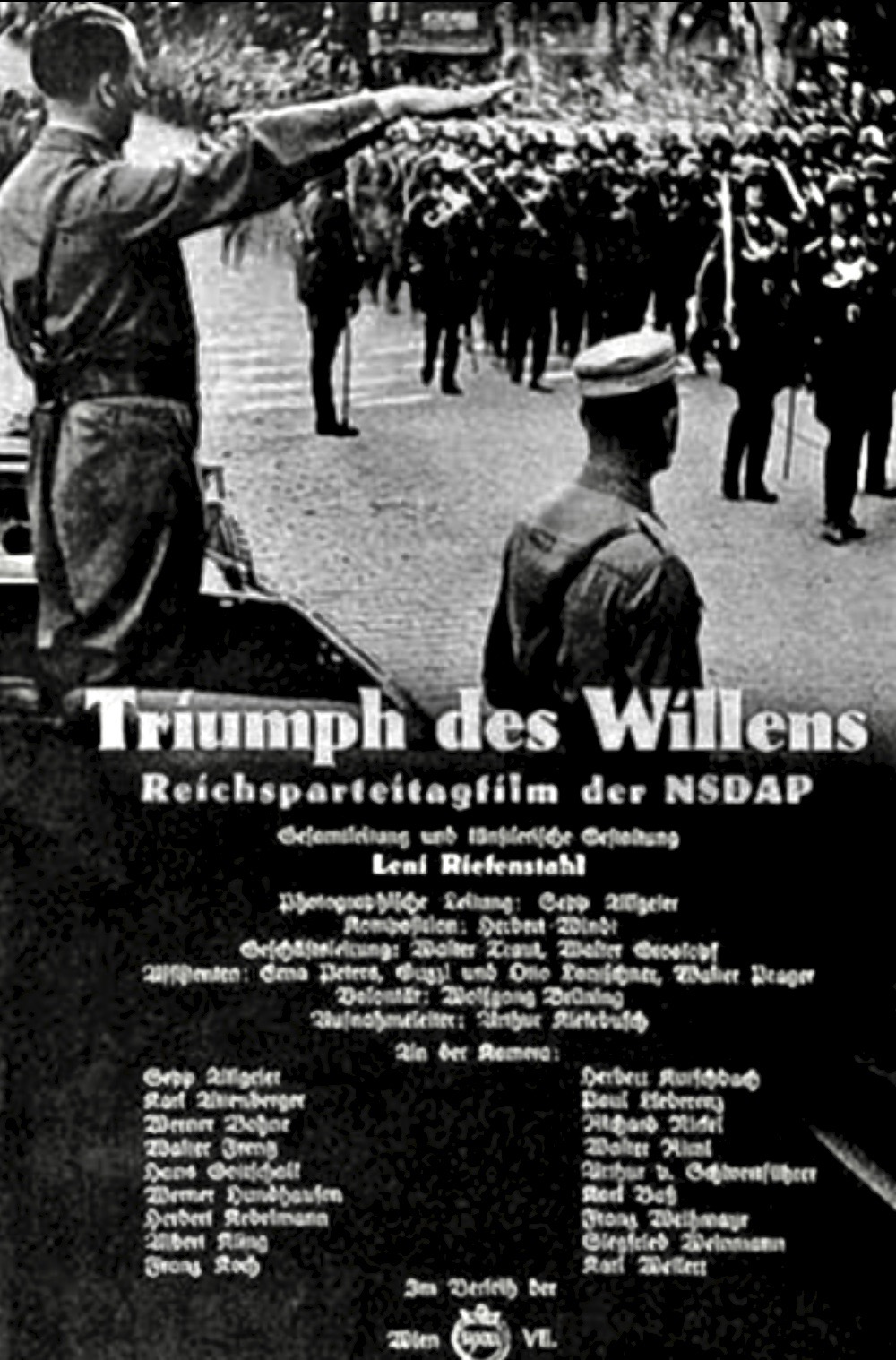
When Hitler’s architect Albert Speer created the psychic staging for 1934’s sixth Reich Party Day Celebration at Nuremberg that Leni Riefenstahl captured in Triumph of the Will, he was practicing the exact physics of attention that the Theosophists had mapped out decades earlier. The growing Nazi state had absorbed the natural, spiritual impulse toward communal unity of the people and artificially manufactured a rigid, top-down technological egregore to fuse those people together in one cause.
Riefenstahl had captured Speer’s infant egregore in her first propaganda film for the party the year before in 1933’s Der Sieg des Glaubens: The Victory of Faith but the attention brought on by its uneven production values and glorification of Brown shirt leader Ernst Röhm had struck terror inside the Nazi Hierarchy. Built around temporary wooden bleachers, chaotic lighting and makeshift decorations, she had portrayed Ernst Röhm’s Brown shirted working class SA, the Sturmarbteilung running the event and frequently featured the Brown-shirt leader side by side with Hitler as a co-equal.
Röhm’s June 1933 “Second Revolution” speech in which he explicitly threatened Germany’s bourgeois elites and his November 1933 threat that the state bureaucracy should be brutally dismantled, had already threatened the image of Nazi strength and unity. Victory of the Faith only made it clearer. Something needed to be done and Speer and Riefenstahl were the only ones with the knowledge and understanding of the technology to alter the course.
Röhm and his SA had done the dirty work of bringing Hitler to power. From a Theosophical or Masonic perspective it was the working class Röhm and not Hitler who’d invoked the Nazi Egregore and fed it with his storm and fury. Ernst Röhm was the true energy within the Nazi Egregor but his February 1934 demand for control of the military was a threat to the entire project. Röhm’s desire to disband the German Army and replace it entirely with a People’s Army built around the SA was seen by his enemies as Soviet inspired. Himmler and Göring labelled his rhetoric a treasonous, communist-style plot to overthrow the state and by late June of 1934, Hitler was forced to act.
Hitler had successfully merged the Nazi party into Germany’s traditional conservative establishment, making alliances with wealthy industrialists, landowners, and the Prussian military elite. Röhm despised this compromise viewing Hitler’s rise to power as a political betrayal of the working class and demanded a “Second Revolution” to fix it.
Röhm’s second revolution was meant to be a social and economic overhaul, including redistribution of capitalist wealth and the seizure of estates of the old aristocracy—ideological goals that sounded identical to Soviet communism. Because the SA had drawn millions of its members from the desperate, unemployed German working class, its ranks were already saturated with former communists and Röhm made no secret of their shared purpose at one point claiming his SA had more in common with the Soviet Communist party than with his own Nazi Party.
As a popular leader and war hero, Röhm was surrounded by a psychic force of loyal followers, consisting of 4.5 million members willing to die for the cause and on June 30, 1934 he and his SA leadership would be forced to do just that.
In the popular telling, the removal of Röhm and his closest lieutenants during The Night of the Long Knives was a brutal, state-sponsored purge ordered by Adolph Hitler to eliminate political rivals and consolidate absolute dictatorial power. But in reality it was an opportunity to purge the Nazi Party of Röhm and his followers and set the stage to replace the SA’s natural egregore with a technological egregore designed and controlled by Hitler’s architect of Empire Albert Speer.
Through geometric design, the construction of permanent stone structures and 130 strategically placed anti-aircraft searchlights from the Luftwaffe, Speer’s creation would soon provide an answer to Röhm’s challenge and establish the world’s first technetronic Egregore.
Although already underway before the Night of the Long Knives, Speer’s Cathedral of Light was a magical working of Light against Dark framing the corporate takeover of the German state as a gift from the heavens, blending classical architectural design through the modern technology of electric light with the ancestral memories of sacred hierarchy. The idea was to focus attention and emotion on shared symbols and beliefs in an effort to create an autonomous psychic entity that would absorb and supersede other such entities created over the history of European civilization. And it succeeded.
Leni Riefenstahl’s Triumph of the Will stands today as the premier example of 1930s German propaganda and the organized madness that saw the rise of Nazi power. But instead of propaganda what it should be known for is its success as an egregore, removed from its natural environment; improved and modified by the will of its creators through technological amplification to become a beast that nearly consumed the world and is still at work trying.
Theosophists were central to this transformation, functioning as the intellectual bridge that turned a vague concept and ancient theological term into the modern blueprint for psychic engineering.
But how did Triumph of the Will set the stage for the Kennedy assassination and how could we possibly compare the 1930s Nazi experience of Ernst Röhm to the public assassination of JFK?
Though vastly different in personality and intent the two events share a correspondence that seems remarkably similar to the behind-the-scenes struggle over JFK, in which Ernst Röhm and JFK both represented a natural egregore under threat from an elite determined to subsume their power and replace them with something artificial.
It’s not hard to imagine that certain groups in Washington, New Orleans and Dallas may have seen the presidency of JFK as a similar threat to their traditional power base and given the opportunity, willed an Egregor to remove him from office while drawing his psychic willpower to their own.
It has already been established that Masonry played a foundational role in the creation of the United States and the design of Dealey Plaza as a place of Masonic ritual. An article posted on Illuminati News Understanding the Occult: What is an egregore? by Theron Dunn, a 32nd degree Mason is necessary to understand how the individual Mason is trained into using these techniques:
“An egregore is the psychic “entity.” All members of a group, whether it is a club, your family, your lodge, a faith, a political party, a country, or even a single person, are united with the egregore of that group through a psychic connection. As a result, and given the nature of society, we are often included in the sphere of several egregores at once.
The strength and ability of the egregore to aid and assist the members of the group grows over time through numbers, by drawing support from the members constituting it and through their repeated actions maintain its power. The egregore, in turn, invokes the immaterial and raises us from the material, connecting us to the subtle worlds.
In freemasonry the egregore is a psychic entity, existing between the material and the spiritual, in contact with both. It is the creation of the psychic will of the members of the group, and exists as a connection to the divine. Some egregores, like the egregore of a lodge, a church, or a country, are the result of a continuous will that creates them, and sustains them.
The egregore of freemasonry has existed for centuries, and is the result of the focused will to connect with the spiritual from millions of men. As we work rituals, the focused mental energy creates and invokes the egregore to fulfill the need of the group. An egregore is not a magical creature, it is not self-aware, and is not a Djin to carry out wishes. The egregore serves as a conduit, a nexus, to connect the group that created/invoked it to the spiritual.”
The occult workings of the Theosophical Society provided the vocabulary and structure to describe Triumph of the Will as a “technological egregore” in which they took the raw, organic forces of natural egregores and wrote an instruction manual on how to consciously construct, feed, and weaponize them using human attention. Theosophists such as Charles Webster Leadbeater and Alice Bailey drove this conceptual transformation in an effort to tap into higher levels of consciousness and began in three distinct phases with phase one being the codification of thought-forms.
Early Theosophists, notably Helena Blavatsky and Annie Besant, formalized Eastern and Western occult ideas into a modern vocabulary of “thought-forms” arguing that shared human emotions and focused attention generated semi-autonomous psychic entities in the astral plane that could influence human behavior. This phase treated collective entities as organic, natural phenomena arising spontaneously from religious or social groups.
Phase two of this process was labelled the mechanization of the spectacle in which totalitarian movements utilized modern technology to artificially manufacture and accelerate these psychic currents. Triumph of the Will served as a blueprint for this transition by using cutting-edge cinema, camera angles, and tightly choreographed crowds to bypass individual critical thinking.
The result was an organic crowd psychology converted into a standardized, reproducible industrial product designed to feed a centralized political objective.
Phase three came as the weaponization of attention through advertising and media in which modern esoteric and media analysts reframed events through computers and communication devices to create an egregore that was no longer viewed as a purely mystical entity. Instead, the Egregore became transformed into a technological feedback loop constantly harvesting human attention with repetition acting as the code, and mass media serving as the physical hardware keeping the artificial construct alive and self-defending.
For anyone who came of age during that weekend of November 22, 1963, the JFK assassination remains the single most horrific event of our lifetimes but now recognizing it as an egregore sixty three years later reveals the intent of a larger and sinister plan for using technology to hijack a raw human event and turn it into a permanent, artificial mythos.
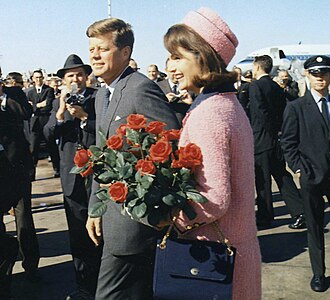
JFK arrived in Dallas on November 22, 1963 filled with life and the confidence that came with being the president of the most prosperous democracy on earth. He was looking forward to the next four years with no reason to believe he couldn’t broker a permanent peace with the Soviet Union and bring the Cold War to an end.
Through his initiatives, JFK was redefining the nature of presidential leadership in a new post-colonial world, but the warm Dallas reception provided no warning of what was to come. By one of clock, the world that had shown so much promise for the future of peace through JFK’s leadership had changed and would never be the same.
The public execution of JFK triggered an immediate atmosphere of collective grief, panic, and vulnerability which echoed across the planet as a primal, biological shock.
To this day Dealey Plaza acts as a genius loci (spirit of a place) where the physical location holds a specific, palpable psychological weight for visitors, independent of any technology.
Adding to that was the fact that the event was hijacked by a media-collective that within minutes funneled the natural shock into a massive technological egregore lasting for decades and trapping the American people within it. Echoing Triumph of the Will, the JFK narrative was bound to a specific piece of celluloid known as the Zapruder Film. Made by Abraham Zapruder, a 33rd-degree Freemason and an Inspector-General of the Scottish Rite, the film acted as a technological ritual, burning into the collective consciousness through repetition while achieving a level of attention Leni Riefenstahl could never have imagined. The assassination provided live coverage to the entire world, binding it together for days including the live shooting of Lee Harvey Oswald.
Instead of Riefenstahl’s film camera, Dan Rather’s TV lens became the monocular eye of the egregor directing the collective mind through an endless splintering of the narrative through magic bullets, grassy knolls and conspiracy theories leaving only a self-sustaining, artificial thoughtform to live on. And live on it did in a thousand books, documentaries, and internet forums, evolving into a mass media technological egregore that exists today completely independent of the physical event and purpose of the real man that died in 1963.
With the rare exception of America’s founding fathers, JFK demonstrated a natural, organic expression of American leadership with an ease and fluency making it clear that we all stood together with pride at the crest of a new frontier. Instead in his absence American power was redirected from a triumphant peace and a more secure world to an egregore fed by a war mentality that has brought us closer to the precipice of annihilation, than ever before.
In classical occultism and as detailed by the Mason, Theron Dunn, an egregore is traditionally organic, growing slowly from continuous human will in lodges, churches, or families. Evidence suggests however, that the Nazi regime—heavily influenced by esotericism—pioneered a technological egregore and that that egregore—in an extremely altered form—coexists with us today.
By utilizing Leni Riefenstahl’s groundbreaking cinematic techniques the creators did not just record a rally in September, 1934. They wrote an instruction manual on how to artificially construct, feed, and weaponize an egregore using mass human attention. Instead of relying on a slow, organic spiritual connection, to unite the German people, cinema and radio acted as technological amplifiers, forcefully binding the psychic attention of millions into a single, synthetic collective entity that nearly consumed the world.
Ernst Röhm and his SA represented the raw, organic, and populist “street power” of the early Nazi movement: A chaotic, grass-roots force bound to Röhm’s personality. On the other hand John F. Kennedy & The New Frontier represented a vibrant, organic cultural hope—the “Camelot” mythos driven by a deep, natural public charisma and a promise of systemic renewal.
The traditional German military elite and Hitler’s inner circle saw Röhm’s massive, independent paramilitary force as a direct threat to state stability. Power elites in Washington, New Orleans, and Dallas – the military-industrial complex and intelligence agencies – saw JFK’s policies as a threat to their traditional power base.
Röhm was violently eliminated, and his raw populist energy broken down, harvested, and fed into the highly clinical, structured, and artificial state- machine of the SS. JFK was publicly executed in a highly visible ritualistic fashion, effectively shattering the organic “Camelot” egregore and transferring his power back to the entrenched institutional establishment.
According to this esoteric framework, the groups that orchestrated these assassinations understood psychic engineering. A public execution serves a dual occult purpose by violently shocking and severing the psychic connection between the public and the leader’s organic egregore. By capturing the collective trauma, grief, and terror of millions of witnesses simultaneously, through visual experience, the creators of the plot redirected that massive burst of psychic energy to feed and solidify their own artificial egregore.
In this view, the stage set by Triumph of the Will was the proof-of-concept that human consciousness could be engineered en masse. The events of Dallas in 1963 applied those same principles of focused attention and emotional amplification to execute a hostile takeover. That hostile takeover resulted in an endless war and the world we live in today and in that sense, seen through a lens spanning nearly a hundred years, the purpose of 1934’s Triumph of the Will, was fulfilled by the assassination of JFK.
So what can we do now to get back to the reality that JFK offered us but was stolen by unseen forces who entrapped us all in their artificial reality?
In our study of JFK we have offered an esoteric interpretation of the Fitzgerald legacy not merely as just a series of political coups, but as acts of “psychic engineering” designed to dismantle organic collective movements and feed institutional power structures. The destruction of the Desmond branch of the Fitzgerald family in Ireland, cleared the platform for the creation of a British Empire that over a period of four hundred years came to establish the rules for more than just a physical empire, but a cultural empire of the mind.
To break from this invisible psychic framework and find an actionable path forward based on this analysis, we must first begin by shifting from a passive state of collective trauma to an active state of individual and shared sovereignty.
According to this model, artificial egregores such as entrenched institutional military or state institutions rely entirely on mass human attention, fear, and trauma to sustain their authority. When an organic, charisma-driven movement—like JFK’s “New Frontier”—threatens the status quo, a public shock event is used to sever the public’s connection to that positive vision, redirecting that emotional energy back into the institutional system.
To shift away from the artificial reality and return to the trajectory offered by the New Frontier, we suggest several distinct solutions rooted in consciousness, historical reclamation, and personal authority beginning with first starving the artificial system by reducing the passive consumption of institutional narratives, mass media spectacles, and manufactured crises that generate fear and helplessness. Because these systems require collective attention to exist, withdrawing your focus weakens their influence.
The second step in this process is to refocus on JFK’s Living Legacy by engaging directly with the ideas, speeches, and unfulfilled initiatives of the New Frontier (such as a triumphant peace, space exploration, and systemic renewal). Treating these concepts, not as dead history, but as active blueprints, revitalizes the organic connection.
The third step is to internalize the leadership by shifting away from looking for an external savior or a Messiah to embodying the leadership yourself. The core gift of JFK’s philosophy was the empowerment of the individual to act with free will. Use this gift and prosper.
And the fourth step is something I know many people are already doing which is to build decentralized communities: Creating local, organic networks based on mutual support, open dialogue, and shared purposes helps everyone, including yourself. Smaller, continuous circles act like traditional lodges or families, growing organic collective strength from the ground up rather than relying on top-down media amplification.
Everyone alive today can understand that something very important but intangible occurred with the death of JFK. Following these simple steps individually or in concert can make a good start at returning to us what was lost on November 22, 1963.
In conservation between Nazi leader Hermann Göring and American prison psychologist Gustave M. Gilbert during the Nuremberg Trials in 1946, Gilbert asked Göring about the German people’s desire for peace now that the war was over.
Göring: “Why, of course, the people don’t want war. Why would some poor slob on a farm want to risk his life in a war when the best that he can get out of it is to come back to his farm in one piece? Naturally, the common people don’t want war; neither in Russia nor in England nor in America, nor for that matter in Germany. That is understood. But, after all, it is the leaders of the country who determine the policy and it is always a simple matter to drag the people along, whether it is a democracy or a fascist dictatorship or a Parliament or a Communist dictatorship.”
Gilbert: “There is one difference. In a democracy the people have some say in the matter through their elected representatives.”
Göring: “Voice or no voice, the people can always be brought to the bidding of the leaders. That is easy. All you have to do is tell them they are being attacked and denounce the pacifists for lack of patriotism and exposing the country to danger. It works the same way in any country.”
Copyright © 2026 Fitzgerald & Gould All rights reserved
Paul Fitzgerald and Elizabeth Gould are authors of Invisible History: Afghanistan’s Untold Story, published by City Lights (2009), Crossing Zero The AfPak War at the Turning Point of American Empire, published by City Lights (2011). Their novel The Voice , was published in 2001. Their memoir, The Valediction Three Nights of Desmond was published by TrineDay (2021) and The Valediction Resurrection was published by TrineDay (2022). For more information visit invisiblehistory,grailwerk and valediction.net Email is gould.fitzgerald@verizon.net