

URLs to the NEOCON HISTORY SERIES and Individual Articles
By Paul Fitzgerald & Elizabeth Gould from 2011-2020
The Sordid History of British Manipulation of American Democracy Series June, 2018
Part 1: MI6 intelligence has always been an anti-Soviet/Russian “Rumor Factory”
Part 4: How the Safari Club became the real CIA
Part 5: Brzezinski’s Safari Club “Friends” Did the Dirty Work Behind the Scenes
Part 6: The Death of Adolph Dubs – Cui bono? ‘To whom is it a benefit?’
The Grand Illusion of Imperial Power July 27, 2018 (Summary of Parts 1-7)
The Turning on Russia Series April, 2018
Part 1: It’s been done to Russia before but this time will be the last
The Neocon Takeover of America Series August, 2017
Part 1: Darkness at Noon
Part 2: The West is Disintegrating
Part 3: Engineering Public Perception to the Right for the Right
Part 4: Ceaseless Propaganda, Outright Lies and Distorted Facts
The Universal Empire Series April, 2017
Part 1: American Imperialism Leads the World Into Dante’s Vision of Hell
Part 2: How Neocons Push for War by Cooking the Books
Part 3: How the CIA Created a Fake Western Reality for ‘Unconventional Warfare’
Part 4: The Final Stage of the Machiavellian Elites’ Takeover of America
America, an Empire in Twilight Series November, 2016
Part 1: When America Became the Dark Force
Part 2: How Guilt, Innocence & Facts Have Been Rendered Irrelevant
Part 3: Neoconizing the Just War Doctrine in the service of American Empire
Part 4: The End of Illusion
FINALE: The Trump Card is played! Never Underestimate THE FOOL
Psychological Warfare and the American Mind Series Sept., 2016
Part1: A Campaign Where the Lie Became the Truth and the Truth Became the Enemy of the State
Part 2: Building the Afghan Narrative with Black Propaganda, the People, the Process & the Product
Part 3: A Clockwork Afghanistan
Part 4: Willie Wonka & the National Security State
Individual Articles
PRESIDENT CARTER, DO YOU SWEAR TO TELL THE TRUTH, THE WHOLE TRUTH AND NOTHING BUT THE TRUTH? 10/6/20
‘Magical Thinking’ has always ruled the US role in Afghanistan 8/14/20
We’re all CIA assets! What can be done, a personal story 12/7/2018
The Khashoggi Gambit 11/1/2018
Weaponized Dreams? The Curious Case of Robert Moss 9/21/2018
New York Times Strikes Out Again on Afghanistan 11/6/2017
What have they done to our fair sister? An Epitaph 10/6/2017
An Urgent Message to Bernie Sanders’ Supporters 2/17/2017
America’s Late Stage Imperial Dementia 11/3/2016
Brzezinski Vision to Lure Soviets into ‘Afghan Trap’ Is Orlando’s Nightmare 11/3/2016
America Pivots to Brzezinski’s Delusion of Eurasian Conquest Essay 10/14/2015
America Pivots to Brzezinski’s Delusion of Eurasian Conquest 6/2/2015
Jay Dyer’s interview and Afghanistan and Mystical Imperialism Presentation
OLDIES WORTH REVISITING!
–Jay Dyer’s 2015 interview with Gould and Fitzgerald Veteran researchers, historians, writers and geopolitical analysts Paul Fitzgerald and Elizabeth Gould joined me to discuss their scholarly works, notably Invisible History: The Untold Story of Afghanistan, Crossing Zero and The Voice. In this interview, we dive into mystical imperialism, the Great Game, black ops in Afghanistan, the role of geopolitical strategist Zbigniew Brzezinski and the Mujahideen, the Cold War and the Rand Corporation, Soviet espionage and British Intelligence, spy games, the history of Templarism, Roman Catholicism, BCCI and the drug trade, and much, much more! Click here for our 2 hour interview at Jay’s Analysis.
Our interview about President Carter’s true role in starting the longest war in US history
This week on Talk Nation Radio, as we begin year number 20 of the U.S. war on Afghanistan that Obama pretended to end, Trump promised to end, and it seems every U.S. presidential candidate from here on out (including Trump again) will promise to end, we look at how exactly destroying Afghanistan got started over 40 years ago. Our guests are Paul Fitzgerald and Elizabeth Gould, whose article at World Beyond War dot org is called “President Carter, Do You Swear to Tell the Truth, the Whole Truth, and Nothing But the Truth?.” Total run time: 29:00
Listen to our interview with David Swanson, host of Talk Nation Radio here.
President Carter, Do You Swear to Tell the Truth, the Whole Truth, and Nothing But the Truth?
US Remains Mired in Afghanistan 19 Years Later – Rising Up with Sonali
View our interview here Listen to our interview on mp3 (Duration: 21:20 — 19.5MB)
FEATURING PAUL FITZGERALD AND ELIZABETH GOULD – Wednesday October 7th marks the 19th anniversary of the war in Afghanistan – the longest official war the U.S. has even been in in the modern era. The war is so long that some soldiers who served when the war first began are now seeing their own sons and daughters deploying to the same war. While peace talks are underway between the Taliban and the US-backed Afghan government, violence still continues to plague the nation with relentless bombs and attacks by domestic groups and outside countries like the U.S. But the U.S.’s intervention in Afghanistan goes back much further than 2001. It can be traced back to 1979, a year before the Soviet Union invaded. And that history is in danger now of being rewritten.
.
Dr. Charles Cogan Interview
An interview by Paul Fitzgerald, Elizabeth Gould and Bob Nesson filming with Dr. Charles Cogan former Chief of the Directorate of Operations for the Near East, South Asia Division of the CIA from 1979 to 1984 discusses the CIA’s Afghanistan Operation against the Soviet Union in detail; including the Zbigniew Brzezinski “Trap” admission. The 1 hour 30 minute interview was filmed February 8, 2015.
A Grand Illusion of Imperial Power: Part 1
VT Classic – How Neocon dream for everlasting Hegemony turned America into a nightmare
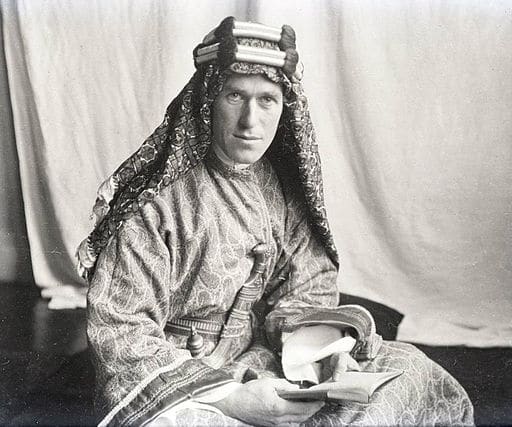
We owe the blueprint of that plan to James Burnham, Trotskyist, OSS man and architect of the neoconservative movement whose exposition of the Formal and the Real in his 1943 The Modern Machiavellians justified the rise of the oligarch and the absolute rule of their managerial elite. But Americans would be shocked to find that our current political nightmare came to power with the willing consent and cooperation of President James Earl Carter and his National Security advisor Zbigniew Brzezinski; aided by intelligence agencies in Europe and the Middle East.
A straight line can be drawn between today’s political hysteria and the 1970s era of right-wing Soviet hysteria as Russia stands accused of “meddling” in American democracy. The merits of those charges have been discussed in depth elsewhere. According to the dean of American intelligence scholars Loch K. Johnson as reported in the New York Times, the United States has done extensive meddling in other nation’s elections.
And then there is that hidden “meddler” behind the meddling; Britain. The extent of British meddling in American politics – at least since – the beginning of the 20th century would shock even the most devout cheerleaders of ex-MI6 agent Christopher Steele and his “dirty dossier”. In a case reminiscent of America’s current hysteria over Russia, British intelligence even meddled with its own government back in the mid-1970s when right-wing elements of the military plotted a coup d’état of Labor Prime Minister Harold Wilson based on information generated by their own disinformation campaign about Soviet influence.
The 1917 Zimmerman telegram and the creation of the British Security Coordination in 1940 directly intervened in American politics on behalf of Britain. But the 1970 Creation of the Institute for the Study of Conflict (ISC) by British secret agent Brian Crozier marked a key turning point in the transformation of officially sanctioned propaganda.
As presented by Edward Herman and Gerry O’ Sullivan in their 1989 study, The Terrorism Industry, “The London-based Institute for the Study of Conflict (ISC) provides an especially well-documented case study of the use of a purportedly ‘independent’ institute as a front for propaganda operations of hidden intelligence agency and corporate sponsors.” The purpose of ISC was to give discredited right-wing, anti-Communist and anti-union clichés in Britain the cover of legitimacy.
The “Institute” got off to a quick start in the U.S. by forging an alliance with the National Strategy Information Center, NSIC a right-wing neoconservative think tank founded by Frank Barnett, William Casey and Joseph Coors in 1962. ISC’s first major triumph came in collaboration with the ultra-right-wing Pinay Cercle when Crozier and his protégé Robert Moss produced an ISC Special Report attacking the legitimacy of détente with the Soviet Union called
European Security and the Soviet Problem.
The study, financed by the Pinay group made no bones about its “Soviet problem” actually being the old “Russia problem” that European Imperialists had been hoping to solve since Napoleon’s disastrous march on Moscow in 1812.
As a devoted acolyte of James Burnham, Crozier brought to his secret world of rightwing businessmen, intelligence, police and military officials a strategic plan to use the media to move the West’s democracies to the ideological right by fabricating threats of Communist subversion.
Determined to undermine détente, Antoine Pinay was so delighted with Crozier’s double-speak he presented the study in person to President Nixon and Henry Kissinger and by 1975 the group was staged to make their move on Washington. Less than two months before the fall of Saigon, the US Committee of the ISC (USISC) was launched which would act as the parent body of the Washington Institute for the Study of Conflict (WISC).
In the vacuum created by Vietnam Crozier and Pinay’s extremism was no longer viewed as extreme. Despite the public scandal over the CIA’s use of Crozier’s Forum World Features as a London-based fake news service, Washington elites were rolling out the red carpet to welcome them, including Zbigniew Brzezinski and George Ball. Under Ball’s Chairmanship WISC appeared a veritable who’s who of high-level ex-CIA, neoconservative and right-wing influencers.
His solution was a secret off-the books “Private Sector Intelligence agency, beholden to no government, but at the disposal of allied or friendly governments for certain tasks which, for one reason or another, they were no longer able to tackle…” including “[S]ecret counter-subversion operations in any country in which such actions were deemed feasible.” Brian Crozier and Zbigniew Brzezinski were of one mind when it came to disbelieving in “mutual coexistence” or power-sharing with the Soviet Union and Brzezinski’s membership in WISC proved it. Thanks to WISC member Richard Pipes and the Team B, Brzezinski could now bring Britain’s radical right-wing formula for social change right into the Oval Office.Brzezinski devised a structure that channeled all executive decisions into two committees, the Policy Review Committee (PRC) and the Special Coordination Committee (SCC) chaired by him. Carter then elevated the national security advisor to cabinet level and the palace coup was complete. As recalled by the neoconservative author David J. Rothkopf in Charles Gati’s 2013 book ZBIG, “It was a bureaucratic first strike of the first order. The system essentially gave responsibility for the most important and sensitive issues to Brzezinski.
Another operation initiated by Brzezinski in 1977 was the Nationalities Working Group (NWG), dedicated to inflaming ethnic tensions among the Islamic populations of the South Asia region. Brzezinski then continued on into nuclear policy where he altered the SALT structure and then rigged the negotiations against Secretary of State Cyrus Vance. With Brzezinski expanding nuclear targeting options from 25,000 to 40,000 and covert action teams sabotaging behind Soviet lines from early 1977 onward the message was clear; SALT and Détente were getting ripped up as well as the very assumptions both were based on.
By 1978, Brzezinski’s plan to use China as a weapon against the Soviets was playing out in Afghanistan. The April, 1978 Marxist coup against the King’s cousin, Mohammed Daoud played into Brzezinski’s “predictions” of a Soviet plan to incorporate Persia and South Central Asia into the Soviet sphere and ultimately take-over The Middle East. Vance rejected Brzezinski’s argument.
The coup had caught both the Soviets and the State Department by surprise and the coup leader, Hafizullah Amin raised doubts on both sides of the fence as an unpredictable agent provocateur. Amin had taken money from the CIA and headed up the Afghan Student Association at a time when it was being used as a CIA recruitment tool for future Third World leaders. Amin was now one of those leaders and Vance was sending a tough and savvy American Ambassador to Kabul named Adolph “Spike” Dubs to deal with him. The outcome would change the world and end in tragedy for all.
In an interview we conducted in 1993 with Selig Harrison – former Washington Post foreign correspondent and Carnegie Endowment Senior Associate – Ambassador Dubs came to Kabul in the summer of 1978 with a mission: Bring Afghan leader Hafizullah Amin over to the American side and keep the Russians out.
President Carter’s national security advisor, Zbigniew Brzezinski had engineered a grander mission: Pressure Amin to draw the Soviets in through destabilization and then keep them tied down and give them their own Vietnam. By the time Ambassador Dubs arrived in Kabul, Afghanistan had become ground zero for a long anticipated anti-Soviet destabilization campaign organized by Brzezinski and carried out by an off the books intelligence operation known as the Safari Club.
The “club” represented the true essence of the CIA ethos; an autonomous covert action organization with global reach, beyond the jurisdiction of American oversight and responsible to no one. A spinoff of the right-wing Pinay Cercle, the Safari Club had been active informally in the Middle East and Africa for years. But the club found its true calling following Watergate and the Church Committee hearings on 30 years of CIA coups, cover-ups and assassinations.
Managed by France’s Count Alexandre de Marenches chief of French external intelligence, the club included the Shah of Iran, King Hassan II of Morocco, President Anwar al-Sadat of Egypt, Kamal Adham, head of intelligence for Saudi Arabian King Faisal and Iraqi strongman Saddam Hussein. More to the point, by 1976 the Safari Club had become the real CIA, covertly funded by Saudi Arabia’s chief of intelligence Kamal Adham through the Bank of Commerce and Credit International (BCCI) and run out of the U.S. embassy in Tehran. Copyright © 2018 Fitzgerald & Gould All rights reserved
The Grand Illusion of Imperial Power: 2 Part Series
VT Classic: We’re all CIA Assets! What can be done, a personal story

CIA sabotaged the anti-war movement through its music
[ Editor’s note: The more things change on the surface, the more they stay the same. Perhaps a useful question would be, how can you have a liberal democracy without it being derailed by popular arts that are rooted in a profane culture, with its consistent goal of social disintegration and reinvention? Will there be an era when the ‘barbarians’ take over, as Americans are molded by covert methods and can not seem to fathom how bad things can get? To the WWII generation, the raucous 1960s generation seemed headed for disaster, and the older gen attempted to push back with their “America–Love it or Leave it” slogan, parrying the youth liberation movement and civil rights. Now seemed like a good moment to revisit a VT Classic by Paul Fitzgerald and Elizabeth Gould where they examine the tension between war and peace. ]
“Of course the people don’t want war. But after all, it’s the leaders of the country who determine the policy, and it’s always a simple matter to drag the people along whether it’s a democracy, a fascist dictatorship, or a parliament, or a communist dictatorship. Voice or no voice, the people can always be brought to the bidding of the leaders. That is easy. All you have to do is tell them they are being attacked, and denounce the pacifists for lack of patriotism, and exposing the country to greater danger. It works the same way in any country.” — Hermann Goering, Nazi Reichsmarshall, Luftwaffe-Chief and founder of the Gestapo, at the Nuremberg trials
The CIA and the 1960s West Coast Music Scene
We had written an article about mind control that included the role of a top-secret CIA research project known as Project MK-ULTRA. MK-ULTRA operated from the early 1950s through the1960s by using Americans, (without their consent) as guinea pigs in an illicit research project to alter mental states and brain function.
The project remained secret for two decades until 1975 when the Church Committee Hearings revealed the CIA’s illegal activities. We knew that MK-ULTRA was involved in experiments in sensory deprivation and sexual abuse. But what really got our attention back then was the confirmation that MK-ULTRA had infiltrated the New Age anti-Vietnam War Movement to undermine its legitimacy which included the widespread distribution of psychedelic drugs.
As teenagers growing up in the 1960s, the San Francisco and Laurel Canyon music scenes and the antiwar movement were synonymous. A new age was dawning and our generation wanted to believe that we could keep war from becoming part of it. What we didn’t know until recently was how much influence military intelligence and the CIA had in forming what we believed was an organic outgrowth of popular sentiment.
The Laurel Canyon Connection
Before bands such as The Mothers of Invention, The Byrds, The Mamas and The Papas and The Doors became famous; the songwriters, musicians and singers who would form those bands flocked from all over North America to Laurel Canyon. What was strange about this sudden migration of musical talent to Laurel Canyon was the absence of a music industry in the area at the time.
What it did have though was Vito Paulekas and the Freaks; a regular feature of the Sunset Boulevard Club scene starting in 1964. Paulekas became well known for supplying a corps of wildly frenzied dancers to stir up interest in the new Laurel Canyon bands and is credited with their early success. Having materialized a musical revolution out of thin air, he has also been credited as the inspiration for the Hippie movement, its fashion and its free love communal lifestyle.
Another oddity of the Laurel Canyon phenomenon was that a large percentage of the artists who arrived descended from America’s most influential ruling families, came with military or intelligence backgrounds or were somehow connected to high ranking military personnel or intelligence operatives.
One example of this unusual confluence of talent is Frank Zappa, (Mothers of Invention) who spent his youth at the Edgewood Arsenal Chemical Biological Center where his father worked as a chemical warfare specialist. It also happens that the Edgewood Arsenal was connected to MK-Ultra’s chemical mind control program.
Major Floyd Crosby, father of David Crosby (Crosby, Stills and Nash) was an Annapolis graduate and WWII military intelligence officer descended from a prominent New York elite founding family, the Van Rensselaers. Crosby’s mother’s family the Van Cortlandts started their American adventure in 1637.
And then there were The Doors. According to Wikipedia, keyboardist Ray Manzarek served in “the highly selective Army Security Agency as a prospective intelligence analyst in Okinawa and then Laos” in the run up to the Vietnam War. The Doors producer for their first five albums, Paul Rothchild also served a stint in the same elite Military Intelligence Corps in 1959.
When the Music’s Over Turn out the Lights
The most enigmatic of all, Jim Morrison, was the son of U.S. Navy Admiral George Morrison.
In August of 1964, U.S. warships, under Admiral Morrison’s command, claimed to have been attacked while patrolling Vietnam’s Tonkin Gulf. Although the claim was false, it resulted in the U.S. Congress passing the Tonkin Gulf Resolution, which provided the pretext for an immediate escalation of American involvement in the emerging Vietnam quagmire.
Along with becoming the Door’s lead singer, Morrison also played a major role in forming the band’s identity.
He chose the band’s name from one of his favorite books, Aldous Huxley’s The Doors of Perception. It turns out that Huxley’s “doors” opened through the use of psychedelic drugs. Not so coincidentally it also happens that Huxley was a key player behind MK-Ultra as one of the original promoters of the use of psychedelic drugs for social control. In a letter to George Orwell in 1949 Huxley described their use as “more efficient…than prisons.”
As an avowed acolyte of the Greek god Dionysus and the Dionysian Mysteries – the most famous religious rites of ancient Greece – Morrison reveled in the use of drugs, drink and frenzied dancing. Morrison was so enamored of this Greek god he almost named the band after him, until settling on The Doors.
MKUltra’s objectives had much in common with the Dionysian Mysteries and with Jim Morrison’s philosophy of life who once said of his own behavior “I believe in a long, prolonged, derangement of the senses in order to obtain the unknown.” Morrison was also described by those who knew him as a Dr. Jekyll and Mr. Hyde. The Doors Manager Paul Rothchild explained it this way, “You never knew whether Jim would show up as the erudite, poetic scholar or the kamikaze drunk.” Given his lineage, the question remains; was Jim Morrison in control of his own mind?
In view of current New Cold War plans to mount a full scale global war against China and Russia, Americans need to look back and reconsider the turning points that brought our country to this crossroads
How did we as Americans come from being so much against war in Vietnam in the 1960s into preparing for a world war against just about everyone on the planet today?
Was the Laurel Canyon scene the only operation subtly sabotaging the legitimacy of the anti-war movement by co-opting its message?
Or was the CIA responsible for another popular piece of counter-culture showmanship intended to permanently wrap the anti-war movement and public dissent in a beaded cloak of freaked out hippies, communal sex and acid trips on LSD?
The 1950s and 60s saw the United States in direct competition with the Soviet Union not only for military superiority but also for the world’s hearts and minds. With an emphasis on “freedom of expression”, the Cultural Cold War waged by Washington embraced a broad swath of cultural activities that were intended to outshine anything done by its communist rival.Given the nature of this cultural competition in literature, music and the arts, is it so surprising that the American intelligence community should have had a hand in the creation of uninhibited performance, free from the rules and strictures of the past? A successful psychological warfare campaign to break down traditional patterns of behavior would require a willingness to participate and the blueprint had already been laid out in 1953 by the CIA’s Psychological Strategy Board’s comprehensive doctrine for social control known as PSB D-33/2. With an emphasis on the strange and the avant-garde, the CIA began bringing artists, writers and musicians into what was known as its “Freedom Manifesto”.
The CIA would come to view the entire program, beginning with the 1950 Berlin conference, to be a landmark in the Cold War, not just for solidifying the CIA’s control over the non-communist left and the West’s “free” intellectuals, but for enabling the CIA to secretly disenfranchise Europeans and Americans from their own political culture in such a way they would never really know it
As historian Christopher Lasch wrote in 1969 of the CIA’s secret co-optation of America’s non-communist left, “The modern state … is an engine of propaganda, alternately manufacturing crises and claiming to be the only instrument that can effectively deal with them. This propaganda, in order to be successful, demands the cooperation of writers, teachers, and artists not as paid propagandists or state-censored time-servers but as ‘free’ intellectuals capable of policing their own jurisdictions and of enforcing acceptable standards of responsibility within the various intellectual professions.”
While declaring itself as an antidote to communist totalitarianism, one internal CIA critic of the program, PSB officer Charles Burton Marshall, viewed PSB D-33/2 itself as frighteningly totalitarian, interposing “a wide doctrinal system” that “accepts uniformity as a substitute for diversity,” embracing “all fields of human thought — all fields of intellectual interests, from anthropology and artistic creations to sociology and scientific methodology.” He concluded: “That is just about as totalitarian as one can get.”
The evidence that the birth of the psychedelic 1960s West Coast New Age music scene was guided by the invisible hand of military and intelligence operatives is well documented. But what about the American Tribal Love-Rock Musical HAIR that swept the world from its debut in 1968 after opening to rave reviews on Broadway?
We lived our personal experience with HAIR when we became a part of the Boston production in 1970 while college students. HAIR was on the front lines of the anti-war movement and we waved the banner every night for a year before sold-out audiences. To us, the Vietnam War was nothing more than what Daniel Ellsberg described as a neocolonial enterprise repeating France’s mistakes.

HAIR was a worldwide phenomenon with original casts in every major U.S. city and nineteen productions outside North America. Its main theme was strongly anti-war and was shared by the millions of Americans who watched and participated in it. Every HAIR cast was local to the city it performed in and established new standards for racial diversity unheard of at the time.
Almost 50 years on we still receive letters from people whose lives were profoundly changed by the performance. HAIR made the war and its impact on human beings personal in ways that nothing else could. But that impact and the anti-war momentum it had accrued was soon lost and within a short time channeled away from the universal peace we believed was possible.
Was HAIR’s popularity just a fluke; the beneficiary of some temporary anti-war fad? Or was it part of a cultural cold war experiment to influence public opinion that succeeded beyond expectations and was then made to go away? A post-Vietnam 1977 revival at the Biltmore Theatre where it had run for 1750 consecutive performances from 1968 to 1972 was attacked by the New York Times as “too far gone to be timely; too recently gone to be history or even nostalgia.”
With its antiwar message derided and dismissed as reminiscent of “something of the old battles re-fought quality of an American Legion reunion,” and with President Carter’s Russophobic National Security Advisor, Zbigniew Brzezinski taking over foreign and national security policy at the Carter White House, the new message was clear. The antiwar movement would not be coming to power in Washington in 1977 and never would be.
When the film version of HAIR by Czechoslovakian New Wave director Milos Forman was released in March of 1979 – completely rewritten and fundamentally detached from the original Broadway version – the show’s passionate and prominent anti-war theme was gone. With LBJ, Richard Nixon and Vietnam disposed of; the West’s endless war against Russia could be put back on the fast track.By the time Ronald Reagan was elected president in 1980, the anti-Vietnam War movement had been reduced to a “Syndrome” and cured with an unprecedented World War II size defense budget that transformed the U.S. from a creditor to a debtor nation.
The earmarks of a PSB D-33/2 cultural operation are hidden in plain sight. HAIR may even have been used as a prototype for the so called color revolutions and Arab Springs that followed in the breakdown of the old Soviet bloc. Alongside authors Jim Rado and Jerry Ragni the celebrity arm of the non-communist left was well represented at our February 22, 1970 HAIR opening night in the presence of Peter, Paul and Mary’s Peter Yarrow and the Broadway show’s executive producer Bertrand Castelli; a member of Europe’s cultural cold war elite that hobnobbed with the likes of Jean Cocteau and Pablo Picasso.
Yarrow’s famous song, “Puff, the Magic Dragon” became the anthem of the pot smoking 60s hippie movement and whether by design or coincidence his Ukrainian born father Bernard was a charter member of the CIA’s European cultural front organization known as the National Committee for a Free Europe.
Having served during World War II in the OSS (with distinction) and after joining no less than Sullivan and Cromwell, the Dulles brothers‘ law firm, Bernard helped to found the CIA-funded Radio Free Europe and became its senior vice president.
Along with numerous members of the early 1960s music scene who wound up in Laurel Canyon, Peter Yarrow played an early and active role in the civil rights and peace movements. He even acted as referee between the Old Left’s Pete Seeger and the New Left at the 1965 Newport Folk Festival when Bob Dylan decided to move from “folk” music to rock and roll. In a famous confrontation over what many considered Dylan’s sellout, Seeger threatened sound engineer and future Doors’ Manager Paul Rothchild that he would cut the cable with an axe if he didn’t turn off “that” distortion; but the distortion stayed.
Following Vietnam, Yarrow transferred his antiwar activism to the issue of Soviet Jewry and their emigration to Israel – a major component of the rising neoconservative agenda. Through Yarrow’s leadership, by the 1980s the issue had become a key platform of the Reagan administration to use against any détente with the Soviet Union.
As for HAIR, stripped of its antiwar message, it was reduced to being the poster child of a 1960s debauched hedonism. Or as Bertrand Castelli, the executive producer of the original Broadway production labelled a revival in 2008, “It’s though everything in ‘Hair’ turned into a nightmare, …“Everything that was joyful and harmless became dangerous and ugly.”
War is Insane, Endless War is Suicide
President Eisenhower warned us what would happen if our country dedicated itself to war. War makes you mad. Endless war puts you in a hell of madness from which there is no escape. The madness of that war on the world has come full circle and is now in our schools, parks, bars and homes.
It was of course always there as part of our nature, but we have given in to it. We have given in to that part of our nature that should have matured and been processed but instead has remained aloof and separate from our humanity. That part of our nature has remained unlearned and untamed. We are the victims of our own design and therefore we can change it.
Through various means the CIA did succeed in redirecting the American peoples’ anti-war sentiment towards accepting permanent war (clearly illustrated by the longest war ever in American history in Afghanistan).
To paraphrase Hermann Goering’s 1946 observation:People don’t want war, nobody does, but people can easily be brought to the bidding of their leaders by instilling fear or denouncing the pacifists for exposing the country to danger, no matter where or when and works the same way in any country.
Our only course is to step outside today’s war narrative and see where we are in the paradigm.
The false narratives that control our thinking will fall away as we replace them with the deep knowledge and acceptance of what we have actually lived through. As the past finally becomes prologue; we can imagine the genuine future we truly want and start to make it happen!
A Webinar with Paul & Liz


Magical Thinking and the US War in Afghanistan.
-Watch Paul and Liz’s 8/11/20 discussion on Magical Thinking and the US War in Afghanistan. -Watch the interview clip with Dr. Charles Cogan former Chief of the Directorate of Operations for the Near East, South Asia Division of the CIA from 1979 to 1984 admitting that Zbigniew Brzezinski told him that the “Afghan Trap Thesis” is authentic. -Read Valentine Moghadam’s summary of the discussion.